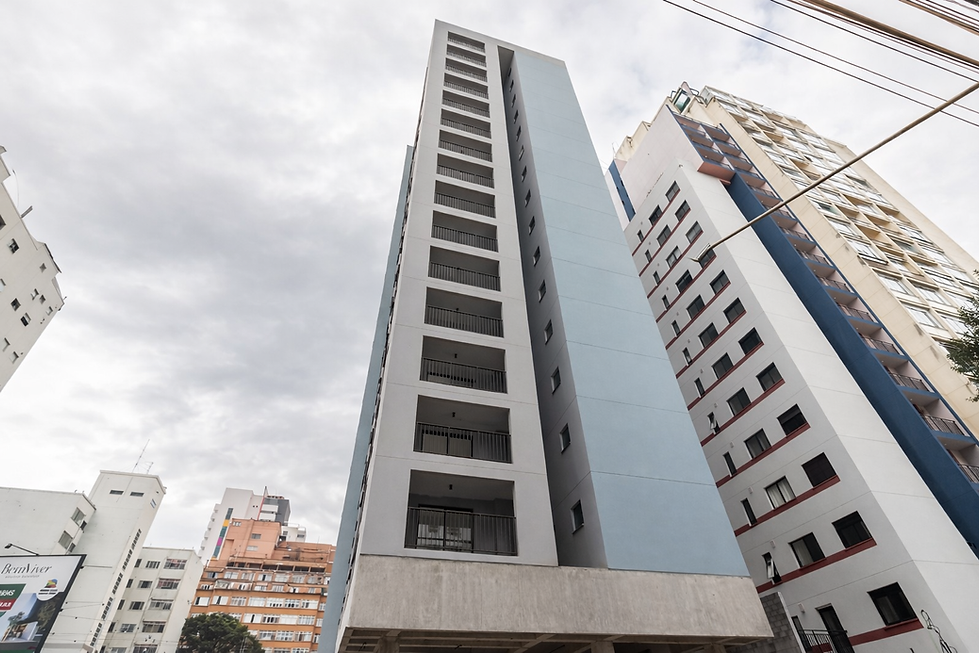
PRAÇA APARTMENT
SÃO PAULO, BRAZIL


2025
Praça Apartment is a 38-square-meter unit located in a privileged area in downtown São Paulo. Conceived for a young resident in his first home, the project is grounded in the idea of autonomy, identity, and the construction of a personal space within the dense urban context.


The layout organizes the program into two clearly defined areas, with an integrated social space and an independent bedroom, ensuring privacy without compromising spatial fluidity. The separation between sectors reinforces a sense of order and proportion within the compact footprint.
The linear kitchen concentrates functions along a single wall, complemented by continuous upper cabinetry that increases storage capacity and establishes visual unity. Wood plays a central role, contrasting with neutral surfaces and balancing warmth with formal restraint.


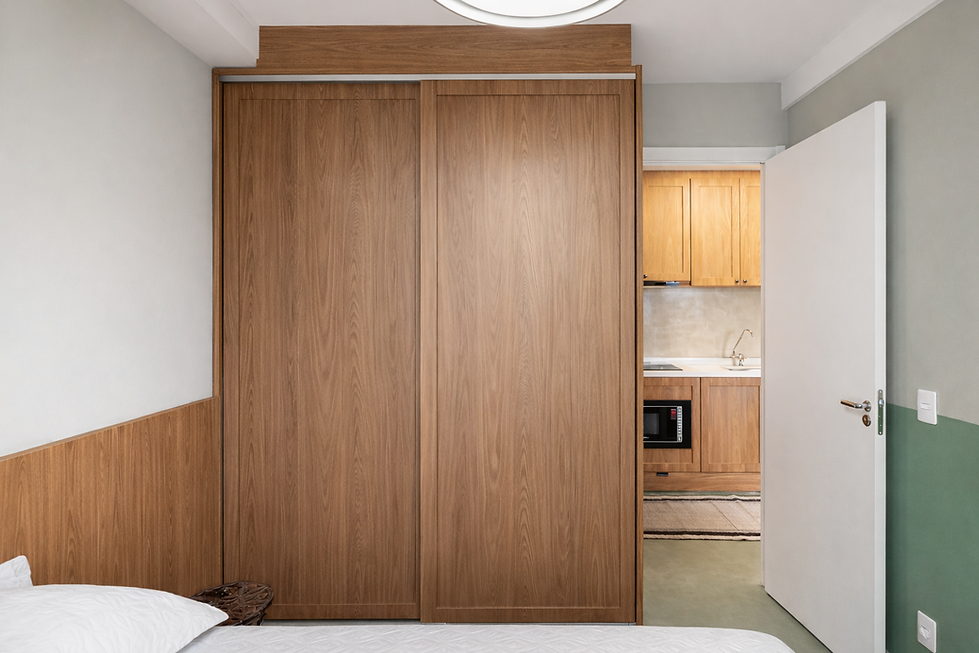
The choice of green polished concrete flooring responds to the predominantly mineral character of the surroundings, marked by concrete buildings and limited vegetation. The green tone introduces a subtle reference to nature and softens the urban atmosphere, while the continuous application of the same flooring throughout the apartment, without joints or visual interruptions, reinforces spatial continuity and enhances the perception of amplitude.
The social area privileges lightweight furniture and restrained proportions, encouraging flexibility of use. The selection of the Togo sofa adds character and identity to the space, while the linear wooden bench positioned by the window visually expands the room without adding visual weight. It also allows for additional seating when hosting guests and functions as a surface for objects, books, and magazines.

In the bedroom, the large wooden wardrobe organizes the space and reinforces the project’s material continuity. The chromatic composition and focused lighting contribute to a balanced, functional, and welcoming atmosphere.
Openings facing the city provide abundant natural light and frame the vertical landscape of central São Paulo. The apartment establishes a direct relationship with its urban surroundings and proposes a contemporary interpretation of first-time living, where materiality, proportion, and constructive rationality define spatial quality.